


- Depicts a woman’s fractured face with two distinct eyes, symbolizing duality.
- Warm desert hues and rugged mesas reflect the Southwest’s beauty.
- Cracks in her face represent growth and endurance.
- Highlights the harmony between human resilience and nature’s vastness.

Artwork, The Cost Of War Collection
Burden of the Future
Burden of the Future
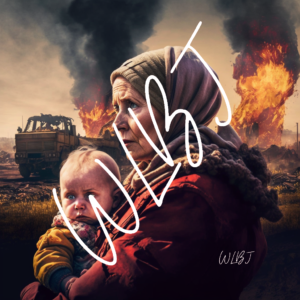
Theme: The lasting impact of war on future generations, depicting the physical and emotional burdens survivors carry.
Central Figures: A sorrowful yet defiant woman and a distant child, embodying grief and lost innocence.
Message: Burden of the Future urges society to recognize the long-term impact of war, advocating for peace, compassion, and love to prevent passing on an unbearable burden to future generations.
$1,500.00 – $2,000.00
CompareBurden of the Future
In Burden of the Future, the haunting image of a woman and child stands as a stark portrayal of war’s unrelenting grip on humanity. The woman, cloaked in a weathered, tattered scarf streaked with muted blues and reds, gazes forward with eyes etched in sorrow and defiance. Her face, marked by dirt and grief, reflects the endless weight she carries — a life disrupted, a future uncertain. Behind her, an inferno erupts, its flames illuminating the destruction of tanks, homes, and the remnants of a once-thriving civilization. Thick, ashen smoke spirals skyward, painting the canvas of the sky with the dark hand of war’s destruction.
At her side, a small child, swaddled in a hooded jacket, clings tightly to her shadow. The child’s expression — stoic and distant — is an unsettling reflection of innocence lost too soon. Despite his size, his posture bears an unnatural weight. It’s as though he already senses the colossal burden of a future shaped by conflict. The tank smoldering behind him symbolizes not just the physical destruction of war, but also the emotional and societal tanks that roll through the lives of those who survive it. The child, poised in front of the flames, serves as a painful reminder of generations being born into conflict. Their childhoods are consumed, their innocence scarred, and their futures defined by survival.
WLBJ masterfully captures the dual weight of grief and resilience in this piece. The woman, a figure of steadfast resolve, carries the emotional burden of her child and their shattered world, as flames continue to burn all she once knew. The contrast between the flames and the cold blue tones of her scarf symbolizes the pull of two forces: the chaos of destruction and the fragile hope for peace.
Through Burden of the Future, WLBJ challenges us to acknowledge war’s relentless toll. This toll is not only on the present but on the future we leave to our children. The piece is a powerful plea to humanity. It asks us to choose compassion over conflict, peace over destruction, and love over hate. The question is raised before the burden we pass on becomes too heavy to bear.
| Size | 24×24, 36×36 |
|---|
Based on 0 reviews
Only logged in customers who have purchased this product may leave a review.
-
Artwork, Southwest Art Collection
Earthbound Essence
Earthbound Essence – Southwest Desert and Human Resilience
- Theme: Resilience, interconnectedness, and the relationship between humanity and nature.
- Composition: Woman’s figure split into two halves—left side vibrant with life (cacti, flowers, butterfly) and right side rugged, reflecting the desert’s raw beauty.
- Symbolism: Butterfly represents transformation and renewal; rock formations symbolize endurance.
- Color Palette: Earthy tones, soft light and shadow interplay.
- Mood: Serene yet powerful, celebrating the cycles of growth, strength, and change.
- Message: Reflects on the profound bond between humans and the environment, urging awareness of our place in nature.
SKU: Earthbound Essence -
Artwork, The Cost Of War Collection
Ashes of Tomorrow
Ashes of Tomorrow
- The infant swaddled in fabric represents a fragile hope, clinging to her for survival.
- The backdrop of roaring flames and spiraling smoke symbolizes a world in collapse.
- A war-torn tank in the foreground highlights the contrast between the cold machinery of war and the fragile humanity of its victims.
- The fiery hues and intense imagery amplify the despair and resilience intertwined in the narrative.
- The title, “Ashes of Tomorrow,” underscores the tension between destruction and the faint hope of rebuilding.
SKU: Ashes of Tomorrow -
Artwork, Urban Expressions Collection
Silent Requiem
Silent Requiem
- Subject: A woman’s face bathed in turquoise, purples, and fiery oranges, exuding quiet mourning and unresolved stories.
- Expression: Somber gaze, representing deep emotion and silence.
- Textures: A mix of streaked paint and geometric accents evoke layers of memory and resilience, blending reality with abstraction.
- Tears: Glowing streaks of teal and orange symbolize warmth and despair, creating a contrast between beauty and fragility.
- Symbols: Metallic feathers and shards at the bottom suggest wings, representing freedom and transformation.
- Background: Set against a stark black urban canvas, amplifying the contrast between darkness and light.
- Message: A tribute to the voiceless, urging reflection on silence and the potential for beauty and hope in dark times.
SKU: Silent Requiem -
Artwork, Mountain Montage Collection
Reflections of the Highlands
Reflections of the Highlands
- Theme: Connection between humanity and the serene beauty of the highlands.
- Subject: Woman’s profile emerging from rolling hills, forests, and twilight-lit peaks.
- Composition: Layers of rugged mountains, terraced fields, and dark tree shadows evoke depth and balance.
- Mood: Introspective and serene, symbolizing strength and hope amid life’s challenges.
- Color Palette: Muted earth tones with soft golden highlights, creating warmth and timelessness.
- Message: Celebrates introspection, resilience, and harmony with nature’s grandeur.
SKU: Reflections of the Highlands -
Artwork, Urban Expressions Collection
Petals of Defiance
Petals of Defiance
- Theme: Celebrates the resilience of the human spirit, showing beauty as an active form of resistance against chaos and destruction.
- Figure: A serene woman with a crown of wildflowers, symbolizing strength, endurance, and life amidst adversity.
- Color & Texture: Vibrant reds, blues, and golds represent personal struggle, while fragmented paint reflects decay and rebirth.
- Symbolism: The woman embodies the city’s soul, with the wildflowers symbolizing hope and beauty in the face of destruction.
- Message & Duality: Highlights the paradox of strength in vulnerability, showing that hope is active and defiant.
- Call to Action: Encourages viewers to find beauty in struggle and rise above adversity, embracing resilience and hope.
SKU: Petals of Defiance


You may also like…
-
Artwork, The Cost Of War Collection
Reflections of Ruin
Reflections of Ruin
- Young mother stands amidst a war-torn landscape, her distant gaze heavy with loss.
- Child in her arms symbolizes innocence and hope amidst devastation.
- The vibrant scarf frames her face, reflecting resilience in the face of conflict.
- Fiery destruction in the background contrasts with their protective bond.
- A ghostly silhouette looms in the flames, symbolizing lost lives and despair.
- “Reflections of Ruin” evokes the human cost of war and the fragility of peace.
SKU: Reflections of Ruin -
Artwork, The Cost Of War Collection
The Inferno Within
The Inferno Within
Theme and Symbolism: The Inferno Within symbolizes the lasting emotional scars of war, particularly PTSD, through the metaphor of an internal inferno of pain and grief.
Central Image: A woman with a hood representing explosions, reflecting the ongoing trauma in her mind.
Message: The piece calls for confronting the cost of war, urging the creation of a society built on compassion and unity, rather than destruction.
Contrast: The vivid flames and ashen sorrow illustrate how war’s damage lingers far beyond physical destruction, continuing to burn within the soul.
SKU: The Inferno Within


Related products
-
Artwork, The Cost Of War Collection
Embers of Innocence
Embers of Innocence
- A young mother cradles her infant amidst devastation.
- Camouflage coat symbolizes survival; her gaze reflects heartbreak and hope.
- Infant’s red coat highlights innocence and resilience.
- Fiery backdrop and crumbling city underscore war’s toll.
- Silhouetted soldiers evoke the forces driving the tragedy.
- Captures maternal courage and the human cost of conflict.
SKU: Embers of Innocence -
Artwork, The Cost Of War Collection
Shadows of Innocence
Shadows of Innocence
- A young girl with soot-marked face and piercing blue eyes reflects the duality of innocence and hardship.
- She carries a baby on her back, symbolizing resilience and the fragile hope of future generations.
- A vivid inferno and smoldering tank form the war-torn backdrop, underscoring widespread destruction.
- The girl’s profile, illuminated by fire and shadow, captures her dual role as survivor and protector.
- The tank metaphorically burdens her shoulders, representing the weight of conflict.
- “Shadows of Innocence” portrays the human cost of war while highlighting the unyielding spirit of its youngest victims.
SKU: Shadows of Innocence -
Artwork, The Cost Of War Collection
Inferno of Innocence
Inferno of Innocence
- Young woman cradles a baby amidst a city consumed by flames.
- Woman’s bloodied face reflects resolve and despair, her posture protective.
- Child, dressed in a weathered coat, symbolizes hope and innocence amidst destruction.
- Woman’s scarf and tattered clothing tell a story of displacement and sacrifice.
- The flames illuminate their faces, casting them as figures of survival.
- “Inferno of Innocence” highlights the resilience of women and children in conflict.
SKU: Inferno of Innocence -
Artwork, The Cost Of War Collection
Embers of Despair
Embers of Despair
- Mother clutches infant, both marked by the brutality of conflict.
- Goggles on the mother’s head symbolize resilience amidst devastation.
- Baby’s calm gaze contrasts with the inferno and destruction behind them.
- Smoldering wasteland, flames, and a battered tank emphasize the devastation of war.
- Tattered clothing and soot-streaked face tell a story of survival.
- “Embers of Despair” reflects strength, innocence, and the human cost of conflict.
SKU: Embers of Despair


There are no reviews yet.